

SSK focuses on experiential architecture that integrates the form and meaning inherent in space by utilizing data and systems. SSK implements adaptive architecture, an active methodology that transcends the physical limitations of space and ensures a healthy living environment through the optimal balance of form and function. It aims to revitalize fragmented daily life through refined spatialization of intangible elements that affect spatial psychology, such as light, shadow, sound, and fluid dynamics. As a high-end studio that performs comprehensive design from furniture and lighting, which are the basic units of architecture, to detailed design and supervision, SSK does not accept low-cost projects or meaningless prolific works. As a design-oriented studio that pursues the pinnacle of architectural detail through dense study, SSK continues to work on innovative spaces.
SSK 는 공간에 담긴 조형과 의미를 데이터와 시스템에 기반하여 통합하는 실증적인 건축을 추구합니다. 형상과 기능의 최적화된 균형을 통해 공간이 지닌 물리적 한계를 극복하고 건강한 정주환경을 보장하는 능동적인 건축방법론인 Adaptive Architecture (환경적응건축)을 지향합니다. 이는 공간심리에 영향을 미치는 빛, 음영, 소리, 유체 등 무형요소의 정제된 공간화를 통해 파편화된 일상을 재생하는데 목적이 있습니다. 건축의 기본단위인 가구와 라이팅부터 실시설계 및 공사감리까지 종합디자인을 수행하는 High-end Studio 로 저가수주 및 무의미한 다작은 하지 않습니다. 밀도있는 스터디를 통해 건축 디테일의 정점을 추구하는 Design-oriented Studio 로 혁신적인 공간작업을 이어가고 있습니다.

Fine Architecture
What might we mean by a good space? And if such a thing exists, can it endure the slow passage of time? The act of seeking and defining good space should not be the sole preserve of architects; it ought to remain open to everyone. The orderly pattern of objects arranged in a shop window, the ebb and flow of cars filling and emptying a road, the lights that begin to flicker on one by one in the early evening lanes of a residential neighbourhood, the street vendors’ carts carefully positioned so as not to obstruct the passage of pedestrians—these, too, are acts of skilful spatial organisation and use. The scenes produced by such gestures are modest and honest, revealing the rhythm of life without exaggeration or ornament. A discarded fragment of cheese may appear trivial, yet for an ant it becomes both a valuable resource and an effective medium. Drawn by the scent, ants gather around it, and the small piece of cheese is transformed into a lively street, a square, even a market. Good architecture ought to function in much the same way as well-matured cheese. It should be capable of asserting its presence even within isolated or degraded surroundings, breathing new vitality and movement into the spaces around it. In this sense, my modest studio may also be called a good space. White-toned walls and furniture, idiosyncratically designed table lamps, and objects of strong contrast that punctuate the room. It is not a flamboyant interior filled with fanciful artefacts, yet it lacks nothing essential. The space is neither excessively cold nor warm, and it breathes well with steady ventilation. Even as the seasons change, sunlight filters gently into its corners. Partitions and bookshelves placed with quiet precision naturally soften the sounds that drift in from outside. Good architecture must organise space in such a way that these small physical conditions can quietly fulfil their roles within everyday life.
Good architecture should be distinguished from architecture that is merely spectacular. It ought to arise not from passing fashions or speculative formal experiments without foundation, but from the ordinary conditions of daily life. Architecture driven by an architect’s vanity or by fleeting trends often remains the possession of a few. It resembles not a piece of cheese to be shared by all, but a luxury object fashioned to gratify private desire. Architects themselves must remain vigilant against this temptation. Good architecture is not a flamboyant design wrapped in the grand rhetoric of “creation.” Rather, it allows the subtle elements of daily life to permeate it. Light seeping through the narrow gap of a door, the long shadows of the evening sun, the faint aroma of cooking drifting from the kitchen, the gentle breeze entering through a window—such invisible physical elements, light, shade, sound, and air, must be able to settle quietly into the fabric of everyday life. The story of life never reveals itself all at once. It forms gradually upon the rhythm of time, layered through the accumulation of daily sensations. For this reason, the good architect must continually explore and test how the cheese he or she has made may mature as a vessel for life. One must refine the utility of architecture with care, deepen and expand its possibilities, and deliberately leave room for the latent potentials of new ways of living to seep into space. Good architecture is not a finished product concluded by a stylistic movement; it is a process that receives the life that ripens over time, allowing it to grow richer and more abundant.
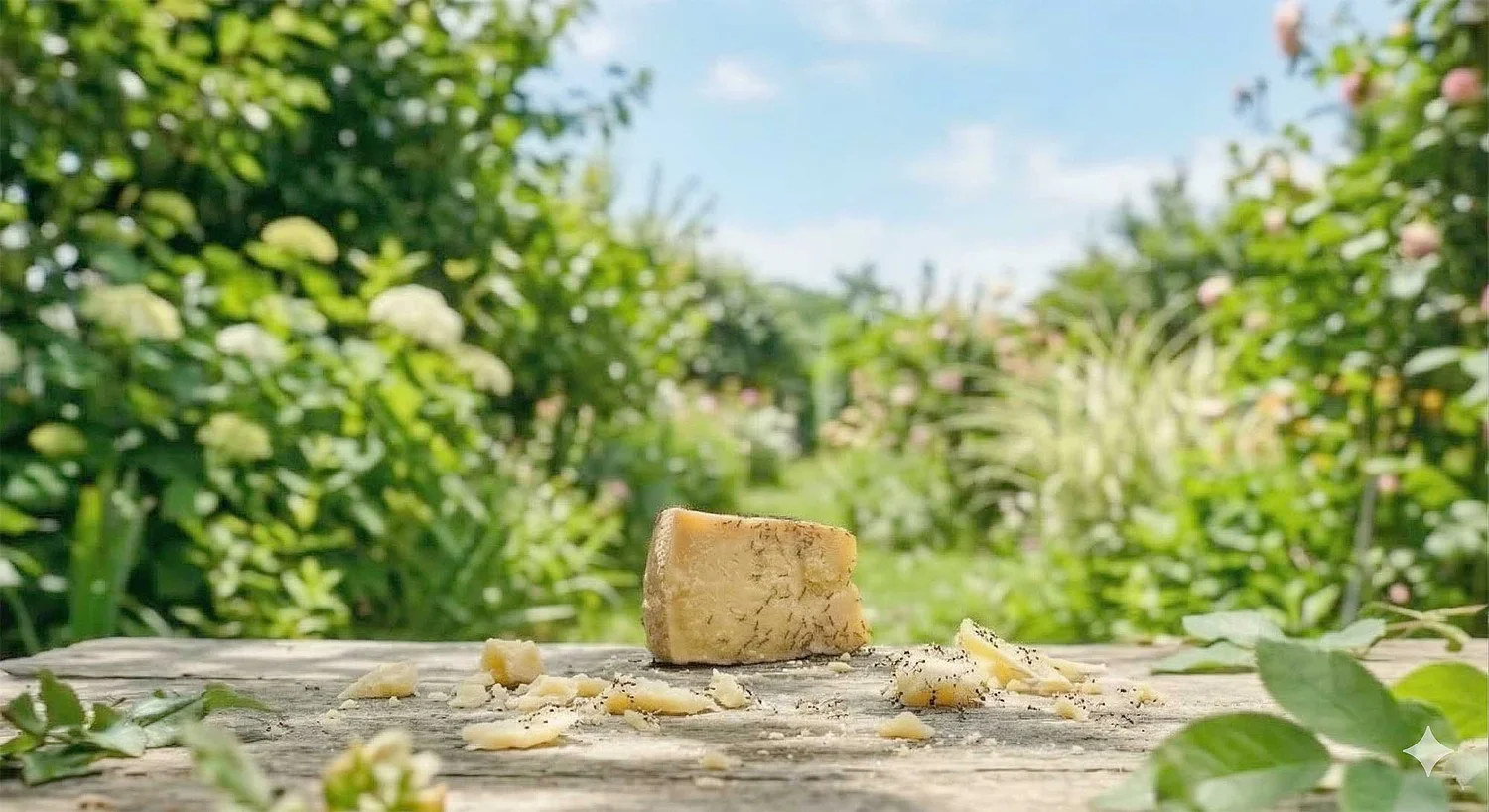
좋은 공간이란 어떻게 정의될 수 있을까. 그러한 것이 존재한다면 영속할 수 있을까. 좋은 공간을 탐색하고 정의하는 행위는 건축가의 전유물이 아니다. 누구에게나 열려있어야 한다. 쇼윈도에 진열된 물건들의 규칙적인 패턴, 도로를 채웠다 비워내기를 반복하는 자동차의 흐름, 초저녁 주택가 골목길에 하나둘씩 켜지는 불빛들, 통행에 방해되지 않도록 세심하게 배치된 노점상의 수레들. 이 역시 공간을 능숙하게 조직하고 활용하는 행위다. 이러한 행위로 만들어지는 풍경은 소박하고 정직하며, 과장 없이 삶의 리듬을 진솔하게 드러낸다. 버려진 치즈 조각은 사소해 보일지 모르지만, 개미에게는 좋은 자원이자 좋은 매체가 된다. 치즈 향에 이끌려 개미들이 모여들고, 작은 치즈 조각은 활기 넘치는 거리, 광장이자 시장으로 변모한다. 좋은 건축은 잘 숙성된 치즈와 같이 기능해야한다. 좋은 건축은 고립되고 오염된 장소에서도 스스로의 존재감을 드러내며 주변에 새로운 활력과 움직임을 불어넣을 수 있어야 한다. 아늑한 나의 작업실은 그런 의미에서 좋은 공간이라 할 수 있다. 화이트 톤의 벽과 가구, 개성있게 디자인 된 테이블 램프들, 대비를 이루는 높은 콘트라스트의 오브제들. 팬시한 장식품들로 가득 찬 화려한 공간은 아니지만 불편함은 없다. 공간은 지나치게 춥지도 덥지도 않고 환기도 잘된다. 계절이 바뀌어도 해가 구석구석 은은하게 스며든다. 적재적소에 배치된 파티션과 책장은 외부에서 들려오는 소리들을 자연스럽게 걸러준다. 좋은 건축은 사소한 물리적 조건들이 일상 속에서 제 역할을 다할 수 있도록 공간을 조직해 낼 수 있어야 한다.
좋은 건축은 겉보기에 화려한 건축과 구분되어야 한다. 좋은 건축은 최신 유행이나 근거 없는 사변적인 건축형식 실험이 아닌 일상의 평범한 조건에서 비롯되어야 한다. 건축가의 허영이나 일시적인 트렌드에 기반한 건축은 결국 소수의 전유물에 머무르기 쉽다. 그것은 모두가 함께 나눌 수 있는 치즈 한 조각이 아니라, 건축가의 사적인 욕망을 충족시키기 위해 만들어진 사치품에 가깝다. 건축가 스스로 이를 경계해야 한다. 좋은 건축은 창조라는 거창한 수사로 포장된 화려한 디자인이 아니다. 오히려 일상의 미묘한 요소들이 그 안에 스며들도록 해야 한다. 좁은 문틈으로 새어 들어오는 빛, 길게 드리운 노을의 그림자, 주방에서 은은하게 풍겨오는 요리 냄새, 창문으로 들어오는 부드러운 바람처럼 빛, 음영, 소리, 유체 등 보이지 않는 물리적 요소들이 잔잔하게 일상속에 스며들 수 있도록 기능해야 한다. 삶의 이야기는 한번에 드러나지 않는다. 그것은 일상의 감각들이 켜켜이 쌓이며 만들어내는 시간의 리듬 위에서 천천히 형성된다. 따라서 좋은 건축가는 자신이 만든 치즈가 삶을 담는 그릇으로서 어떻게 숙성될 수 있을지 끊임없이 탐구하고 실증해야 한다. 건축의 효용을 세심하게 다듬고 그 가능성을 더욱 깊게 확장하며, 새로운 일상의 잠재성이 공간으로 스며들 수 있는 여지를 의도적으로 남겨 두어야 한다. 좋은 건축은 사조에 의해 완결되는 결과물이 아니라, 시간이 흐르면서 무르익는 삶을 수용하고 풍성하게 해주는 과정물이다.

SIMULACRE / Korea Painting / WxL : 210x230mm / Sooseok L. Kim (2011)
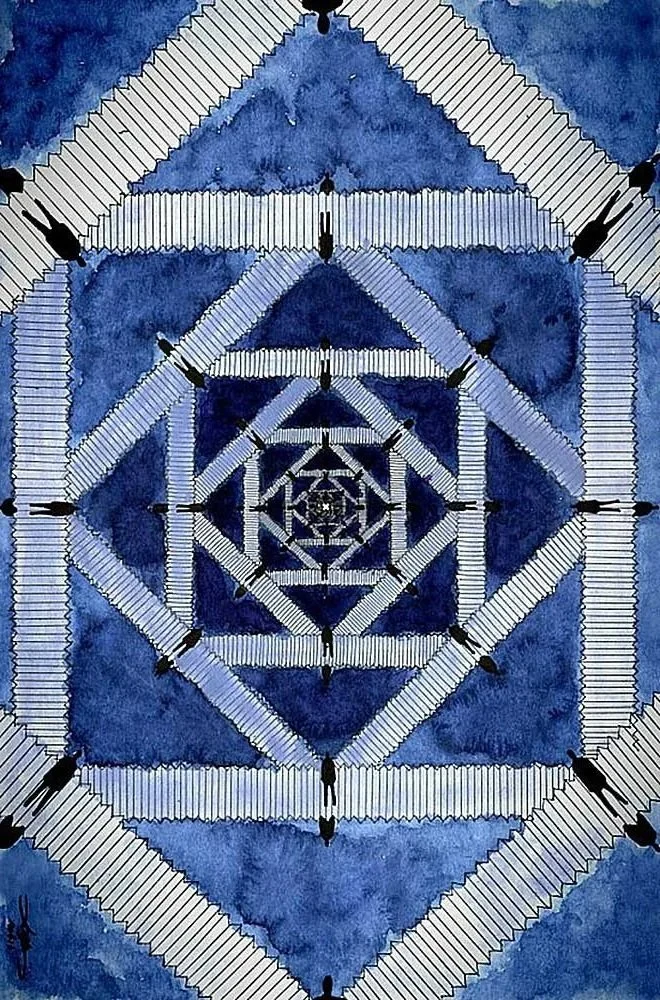
AU MAGASIN DE NOUVEAUTES (육면각체의 재해석) / Korea Painting / WxL : 387x270mm / Sooseok L. Kim (2008)
The Propriety of Art
A work that is universally recognisable and readily embraced, one that may be regarded as broadly appropriate, surely represents the ideal to which every creator aspires. Yet the difficulty that persistently arises in the pursuit of this ideal lies in the matter of judgement, namely the act of selecting the most fitting resolution from among countless ideas and alternatives. In this process, thoughts that once appeared lucid and persuasive often reveal themselves, at the very moment they are translated into language or image, to have been little more than naïve assumptions. Whenever I attempt to articulate or discuss the challenges inherent in my work, I frequently find myself disheartened by the reality that its unfinished state appears more compelling than the completed result. At such moments, I am compelled to ask whether I have become overly preoccupied with the mere act of producing something ostensibly complete. Were great artists truly those who left behind only works perfected through flawless, irrefutable logic? Many masters relied upon the aid of the Camera Obscura, refining and adjusting their work repeatedly in order to accumulate a sense of completion. Such trial and error was not an exceptional occurrence, but rather an entirely natural phase embedded within the creative process. And yet, unable to relinquish a lingering attachment to the notion of perfect creation, I, an ordinary practitioner, often diminish myself as nothing more than a novice learner. Ideas that seem fully formed and without flaw within the mind can, upon being spoken aloud, devolve into something akin to childish complaint. Certainly, there are moments when one arrives at a pinnacle without apparent misstep. However, when such moments are set against the arduous perseverance that others have endured over long periods, they risk appearing not as grounds for pride but as a form of arrogance. Moreover, works that seem to have been completed without error may in fact constitute another kind of failure, one that, having taken flight without sufficient momentum, ultimately collapses more dramatically.
If we regard art as a creative act grounded in a tenacious motif shaped by individual sensibility, then all creation, whether or not it is recognised as art, may be understood as expression filtered through the self. In this sense, regardless of its level, creation is inherently an act of self expression, and art becomes inseparable from the self. From this arises a certain sense of responsibility, the obligation to produce something capable of moving the perceptions and emotions of others. At the same time, this responsibility becomes a source of pride. As long as one’s thoughts and works derive meaning through the evaluation of others, and as long as every work must justify itself before such judgement, no one would wish to be ridiculed for something deemed inadequate. Within this context, the process of striving towards what is most appropriate is inseparable from the growing pains of an artist. I too have experienced countless occasions in which ideas I firmly believed to be remarkable felt trite the moment they were expressed outwardly. Yet this is neither extraordinary nor tragic; it is simply a natural part of the creative process. To arrive, at last, at the most fitting work through repeated trial and error is both a burden the artist must bear and the fundamental desire that compels them ever onward.
누구나 알아보고 받아들일 수 있는, 보편적으로 적합한 작품은 모든 창작자가 열망하는 이상일 것이다. 그 이상을 향한 과정에서 끊임없이 마주하게 되는 어려움은 판단의 문제, 즉 수많은 아이디어와 대안 가운데 가장 적절한 해법을 선택하는 행위에 있다. 이 과정에서 한때 명확하고 설득력 있어 보였던 생각들은, 막상 언어와 이미지로 옮겨지는 순간 순진한 가정에 불과했음을 드러낸다. 작업의 어려움을 타인에게 설명하거나 논의하려 할 때면, 완성된 결과보다 미완의 상태가 더 적절해 보이는 현실에 종종 좌절하게 된다. 그때마다 나는 과연 내가 완성도 있는 결과물을 만드는 행위 자체에만 매몰되어 있는 것은 아닌지 스스로 묻게 된다. 위대한 예술가란 오직 흠잡을 데 없는 반박 불가능한 논리에 의해 완성된 작품만을 남겼을까? 수많은 거장들이 'Camera Obscura'의 도움을 받아 반복적인 조정과 다듬기를 통해 완성의 밀도를 축적해 왔다. 이러한 시행착오는 예외적인 사건이 아니라 창작 과정에 내재 된 지극히 자연스러운 단계였다. 그럼에도 불구하고 완벽한 창작 방식에 대한 미련을 버리지 못하고 나 같은 범인은 종종 스스로를 평범한 학습자에 불과하다고 평가절하한다. 머릿속에서는 결점 없이 완결된 듯 보이던 생각들이, 입 밖으로 나오는 순간 유치한 불평으로 전락하기도 한다. 물론 시행착오 없이 정점에 이르는 순간도 존재한다. 그러나 이러한 순간은 오랜시간 인고의 시간 끝에 탄생한 누군가의 고된 인내와 대비될 때 자부심을 넘어 오만으로 비치기 쉽다. 더 나아가, 오류 없이 완성된 것처럼 보여지는 작업은 종종 또 다른 형태의 실패, 즉 충분한 도약 없이 날아오른 결과로 더 큰 실패로 귀결되기도 한다.
예술을 개인의 감수성에 의해 형성된 고집스러운 모티프에 바탕을 둔 창조 행위로 본다면, 모든 창작은 그것을 예술로 인식하든 그렇지 않든 창작자의 자아를 통과한 표현 정도로 볼 수도 있다. 그렇기에 그 수준을 떠나 창조는 곧 자기표현이며, 예술은 자아와 분리될 수 없는 존재가 된다. 이로부터 타인의 감각과 감정을 움직일 수 있는 무언가를 만들어야 한다는 일종의 책임감이 발생하며, 이러한 책임감은 동시에 자긍심의 근원이 된다. 내 사유와 작업이 타인의 평가를 통해 의미를 부여받고, 모든 작업이 그 평가 앞에서 정당성을 획득해야 하는 한, 누구도 미흡한 작업물로 인해 조롱받기를 원하지 않을 것이다. 이러한 맥락에서 가장 ‘적절한’ 상태를 향해 나아가는 창작의 과정은 에술가의 성장통과 다르지 않다. 나 역시 근사하다고 굳게 믿었던 아이디어가 외부로 표출되는 순간 진부하게 느껴지는 경험을 숱하게 경험했지만, 이는 특별할 것도 없고 비극적인 사건도 아니다. 단지 창작 과정에 내재 된 과정일 뿐이다. 반복되는 시행착오를 통해 비로소 최적의 작품에 도달하는 것은 예술가가 감내해야 할 짐이자, 동시에 그들을 끊임없이 움직이게 하는 근본적인 열망일 것이다.
Paradigm Shift
The traditional architectural paradigm—long predicated upon defining space through structural elements such as columns, walls, floors, and ceilings—has entered a moment of profound transformation. At the heart of this shift lies the user. As rapid advances in digital technology enable bold and experimental designs to be realised within physical environments, users now demand from architects spatial experiences that are far more complex and multilayered than ever before. Historically, innovation in architecture has been driven largely by advancements in materials. The progression from timber to stone, and from concrete to steel and glass, effectively marked the evolution of the discipline itself. Today, however, architectural evolution is no longer governed by materials per se, but is instead catalysed by societal demands for new spatial typologies. This shift is closely intertwined with the intrinsic nature of architecture as a field that necessitates considerable time and substantial investment.
At the same time, developments in material technologies and construction methodologies are redefining architecture—not merely as a finished artefact, but as a potential agent of social transformation. Consequently, the imperative has shifted: rather than inventing fundamentally new materials, the more urgent and consequential task lies in conceiving new spatial paradigms. In tandem with this, the very forms that contain space are being reinterpreted. Moving beyond the physical hexahedron defined by edges and planes, form is increasingly understood as an abstract medium—one that embodies, generates, and communicates narratives through free and fluid expression.
The liberation of architectural paradigms, brought about by new materials and an expanded spatial consciousness, now calls upon architects to embrace an unprecedented degree of innovation and responsibility. Ultimately, architects are no longer bound to the repetitive production of buildings dictated by uniformity and standardisation; instead, they are afforded the freedom to engage with space in a more open, interpretative, and playful manner, articulating it with both imagination and intent.
기둥, 벽, 바닥, 천장 등 구조체를 중심으로 공간을 규정해 왔던 전통적인 건축 패러다임은 근본적인 전환기에 들어섰다. 변화의 중심에는 사용자가 있다. 디지털 기술의 비약적 발전으로 대담하고 실험적인 디자인이 현실 공간으로 구현되면서, 사용자들은 이제 건축가에게 이전보다 훨씬 복합적이고 다층적인 공간 경험을 요구한다. 과거 건축의 혁신은 주로 재료의 진보에 의해 견인되어 왔다. 목재에서 석재로, 콘크리트에서 철강과 유리로 이어진 변화는 곧 건축의 진화를 의미했다. 그러나 오늘날 건축의 진화는 더 이상 재료 그 자체가 아니라, 새로운 유형의 공간에 대한 사회적 요구에서 촉발된다. 이는 건축이 본질적으로 장기간의 시간과 막대한 투자를 필요로 하는 분야라는 조건과도 맞닿아 있다.
한편, 재료 기술과 시공 방식의 발전은 건축을 단순한 결과물을 넘어 사회적 변화를 견인하는 잠재적 주체로 재정의하고 있다. 그 결과, 근본적으로 새로운 재료를 발명하는 일보다 새로운 공간 개념을 창출하는 일이 더욱 시급하고 중요한 과제로 부상했다. 이와 함께 공간을 담는 형상 역시 재해석되고 있다. 모서리와 면으로 규정되는 물리적 육면체를 넘어 자유로운 조형 속에서 이야기를 담고 생성하는 추상적 매개로 이해되고 있다. 새로운 재료와 확장된 공간 인식에 의한 패러다임의 해방은 이제 건축가에게 어느 시대보다도 더 큰 혁신과 책임을 요구하고 있다. 궁극적으로 건축가는 획일성과 표준화가 강요해 온 건축을 반복적으로 생산해야 하는 의무에서 벗어나, 보다 자유롭고 개방적인 태도로 공간을 유희하며 해석하고 표현할 수 있게 되었다.

FLOATING ILLUSION / Pen / WxL : 300x400mm / Sooseok L. Kim (2013)
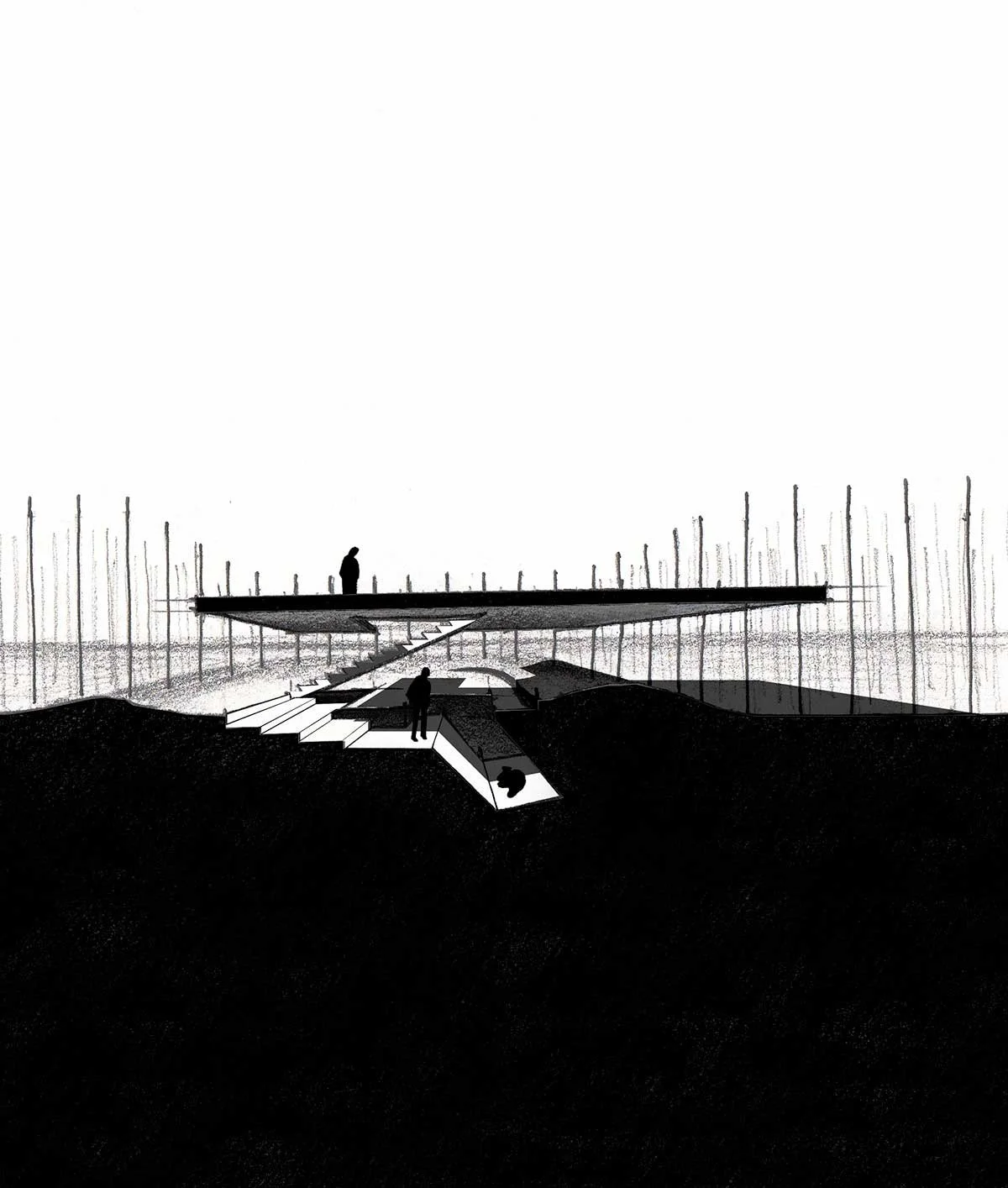
THE TOMB / Pen / WxL : 400x300mm / Sooseok L. Kim (2013)
Role of Architect
Beyond the production of visually flamboyant forms lies a more fundamental reflection on the latent role of the architect. Such reflection extends beyond mere formal experimentation or aesthetic refinement, evolving into an attitude that reconsiders the broader relationship between architecture and society. It poses a critical question to contemporary architects who, absorbed in visual expression, have neglected their social responsibility, one that resonates with the demands of an era in which architecture is no longer confined to individual creation, but is expected to embody both publicness and ethical awareness. Under the imperatives of efficiency and capital, what is most readily discarded is the architect’s disposition to enquire into the essence of things, along with the will to conceive of architecture as a medium that contains and shapes life. In this process, architecture is increasingly reduced to a consumable commodity, while the inherent narrative and sensorial depth of space gradually fade. Has the architect’s capacity for critical thought, conditioned to respond solely to the demands of “service,” truly lost its significance? Or does there still remain a possibility to question and resist from within such constraints?
Numerous visionary architects have experimentally engaged with the traditional yet fundamental elements of light and space, transcending the mere production of form and expanding the very role of the architect within society. Their work has not been limited to shifts in technique or style, but has sought to redefine the ways in which human beings experience space. A space that moves the human spirit cannot be realised through efficient programming or innovation alone; such factors merely constitute the minimum conditions, while genuine resonance emerges on an altogether different plane. Such spaces are generated, accumulated, and ultimately shaped through the interconnected narratives of our lives. Memories and experiences, layered over time, permeate space, allowing it to become a living place. Therefore, to contemplate how these modest yet meaningful stories may be conveyed through the medium of space is to move closer to what might be called an “appropriate” architecture. In turn, the accumulation of such reflection compels the architect to continually redefine their role, revealing architecture not as a finite product, but as an ongoing process of forming relationships.
시각적으로 화려한 조형을 생산하는 일 너머에는 건축가의 잠재적 역할에 대한 보다 근본적인 성찰이 존재한다. 이러한 성찰은 단순히 형태적 실험이나 미적 완성도를 넘어서, 건축이 사회와 맺는 관계 전반을 다시 묻는 태도로 이어진다. 이러한 성찰은 시각적 표현에만 몰두한 채 사회적 책임을 망각한 현대의 건축가들에게 던지는 화두다. 이는 건축이 더 이상 개인의 창작물에 머무르지 않고 공공성과 윤리성을 동시에 요구받는 시대적 흐름과도 맞닿아 있다. 효율성과 돈이라는 이름 아래 가장 먼저 버려지는 것은 본질을 탐구하려는 건축가의 태도와 건축을 삶을 담는 매개로서 사유하려는 의지다. 이 과정에서 건축은 점차 소비 가능한 상품으로 환원되고, 공간이 지니는 고유한 서사와 감각은 점점 희미해진다. 오직 ‘서비스’라는 요구에만 반응하도록 길들여진 건축가의 사유의지는 더 이상 의미가 없는 것일까. 아니면 그 속에서도 여전히 질문하고 저항할 수 있는 가능성이 남아 있는 것일까.
수많은 선지적 건축가들이 빛과 공간이라는 전통적이면서도 근원적인 요소를 실험적으로 다루며, 단순한 조형 생산을 넘어 사회속에서 건축가의 역할 자체를 확장해 왔다. 그들의 작업은 기술이나 양식의 변화에 머무르지 않고, 인간이 공간을 경험하는 방식 자체를 새롭게 정의하려는 시도였다. 인간의 마음을 움직이는 공간은 효율적인 프로그램이나 혁신만으로 완성되지 않는다. 오히려 그러한 요소들은 최소한의 조건일 뿐, 궁극적인 감동은 다른 층위에서 발생한다. 그러한 공간은 스스로 생성되고, 축적되며, 서로 연결되는 우리들의 이야기로부터 형성된다. 시간의 흐름 속에서 켜켜이 쌓인 기억과 경험이 공간에 스며들며, 그것은 비로소 살아 있는 장소가 된다. 따라서 이 소소한 이야기들을 공간을 매개로 어떻게 전달할지를 사유하는 것은 ‘적절한’ 건축에 한층 더 가까이 다가가는 과정일 것이다. 그리고 이러한 사유의 축적은 결국 건축가로 하여금 다시금 자신의 역할을 재정의하게 만들며, 건축이 단순한 결과물이 아닌 지속적인 관계 맺기의 과정임을 깨닫게 한다.
Architect as Mediator
The architecture of the future will be grounded in greater freedom. Yet, even amidst paradigm shifts, the role of architecture as a conduit and medium of communication must not be diminished. Exemplary architecture is defined not merely by historical significance or formal accomplishment; its essential meaning resides in dialogue. Architecture stands as both one of humanity’s most precious assets and one of its most potent instruments. Regardless of function or purpose, it has, throughout history, operated as a forum for discourse and exchange. Thus, a well conceived space must continue to serve as a mediator of life. Just as the sfumato technique dissolves boundaries through subtle gradations of colour, architecture, too, ought to act as a catalyst, expanding boundaries and weaving together diverse narratives within its context.
The future of architecture does not reside solely in the pursuit of radical forms or avant garde design. Beyond mere aesthetics, it must engender new spatial cultures and seamlessly integrate them into daily life. Architects must contemplate how innovative designs can function as effective mediators, how they will be received by their users, and how they might endure over time. The appropriate space an architect seeks is one that, like sfumare, allows colours to blend and diffuse within a mist, carrying with them new discourses that naturally propagate through its users. This approach resonates with traditional architectural values, which have long recognised architecture as a living, evolving entity. Ultimately, the architect of yesterday becomes, once more, the architect of today.
미래의 건축은 더 큰 자유에 기반할 것이다. 그러나 패러다임 전환 속에서도 소통의 통로이자 매개체로서 건축의 역할은 위축되어서는 안 된다. 훌륭한 건축은 단순히 역사적 가치나 형식적 완성도로만 정의되지 않는다. 건축의 본질적 의미는 소통에 있다. 건축은 인간이 소유할 수 있는 가장 비싼 재화인 동시에 가장 강력한 수단이다. 용도나 기능과 무관하게, 건축은 역사 전반에 걸쳐 담론과 소통의 장으로 작동해 왔다. 따라서 좋은 공간은 여전히 삶의 매개로 작동되어야 한다. 스푸마토 기법이 미묘한 색채의 전이를 통해 형태의 경계를 허물듯, 건축 또한 주어진 맥락 속에서 경계를 확장하고 다양한 이야기를 엮어내는 촉매로 기능해야 한다.
건축의 미래는 혁신적인 형태나 급진적인 디자인을 추구하는 데에만 머물지 않는다. 디자인을 넘어 새로운 공간 문화를 창출하고, 이를 일상 속에 스며들게 하는 일 또한 건축의 핵심 과제다. 건축가는 새로운 혁신적 설계가 어떻게 매개체로 작동할 수 있을지, 사용자들에게 어떻게 받아들여지고 지속될 수 있을지를 고민해야 한다. 건축가가 지향하는 ‘적절한’ 공간이란, 'Sfumare'처럼 안개 속에서 색채가 서로 스며들며 확산되 듯, 사용자들을 통해 자연스럽게 퍼져나가는 새로운 담론을 담아내는 공간이다. 이는 건축을 끊임없이 살아 있는 존재로 인식해 온 전통적인 건축적 가치와 맞닿아 있다. 결국 어제의 건축가는 다시, 오늘의 건축가가 된다.

THE MEDIATOR / Sooseok L. Kim (2013)